How to Repair a Sticking Brake Caliper Safely
A sticking brake caliper can cause brake drag, uneven pad wear, a pull, and heat at one wheel. See what the signs mean and when a confirmed repair is the right next step.

How to repair a sticking brake caliper starts with finding out what is keeping the brake from releasing. A caliper that stays applied can create brake drag, uneven pad wear, a pull, heat at one wheel, and a burning smell. The safe repair depends on whether the binding comes from the slide pins, pad hardware, piston, brake hose, or another part of the brake system.
A hot wheel, strong pull, smoke, fluid leak, soft pedal, or major change in stopping behavior is not a symptom to test by continuing to drive. Park in a safe place and treat it as a brake-system concern. Once the vehicle is safely parked, the useful details are which wheel seems affected, whether the concern began after recent brake work, and whether the pedal or steering behavior changed.
A sticking caliper is a brake-drag problem
A floating caliper needs to clamp the pads against the rotor when the pedal is pressed, then release enough for the wheel to turn freely. When a component binds, friction continues after the pedal is released.
Signs that one brake may not be releasing
A vehicle that pulls while braking or begins to feel sluggish can have a brake that is staying applied. One wheel may smell hot after a short drive, produce more brake dust than the opposite side, or make a scraping or high-pitched noise as the rotor turns. The wheel area may be much hotter than the others, but do not touch the rotor or caliper to check it. Brake parts can retain enough heat to burn skin long after the vehicle is parked.
Uneven pad wear is another strong clue. On a floating caliper, the inner and outer pads need to move within the bracket while the caliper slides on its guide pins. A pad worn dramatically thinner than its mate can point to a caliper that is not centering, pad hardware that is binding, or a piston that is not retracting correctly. It does not identify the failed part by itself.
Brake drag can also show up as a changed pedal, vibration, a warning light, or a vehicle that needs more throttle than usual to coast normally. Those signs overlap with other brake, tire, suspension, and wheel concerns. That is why a confirmed repair starts with the condition at the wheel rather than a part ordered from the symptom.

Guide pins and pad hardware are common places for binding
Most passenger vehicles use a floating caliper. The caliper body moves on two guide pins so pressure can be applied evenly to both pads. Each pin sits behind a rubber boot that keeps water and road debris away from its lubricant. When the lubricant dries out, the boot tears, or corrosion reaches the pin bore, the caliper may not slide back to its resting position.
The pads also ride in stainless clips or bracket channels. Rust under a clip, a bent clip, debris in the channel, or a pad that does not fit the bracket correctly can hold a pad against the rotor. This is why a brake job needs the pins, boots, clips, pad ears, and caliper bracket checked together. Replacing pads alone does not correct a guide-pin or bracket problem.
The repair for an externally binding caliper can include cleaning the bracket contact areas, replacing damaged clips or boots, servicing pins that are still in usable condition, or replacing hardware that no longer moves correctly. Brake lubricant belongs only on the specified sliding contact points. It never belongs on the pad friction material or rotor surface.

A seized piston or damaged boot changes the repair
The piston is the hydraulic part of the caliper. Brake fluid pressure moves it outward to clamp the inner pad against the rotor, and the square-cut piston seal helps the piston relax slightly when pressure is released. A torn dust boot can let water and debris reach the exposed piston surface. Corrosion or pitting there can stop the piston from moving smoothly.
A piston that is hard to retract is not a reason to force it back and hope the problem is solved. A damaged piston surface, torn boot, fluid leak, or caliper bore problem can require a caliper replacement or a vehicle-specific rebuild procedure. The pads and rotor also need inspection because prolonged drag can overheat their friction surfaces and change the repair scope.
A manufacturer service bulletin filed with the National Highway Traffic Safety Administration instructs technicians to inspect the piston boot and piston condition before pressing a piston back during pad service, then verify brake drag after the repair. That procedure is vehicle-specific, but the principle is universal: the boot, piston movement, fluid level, and final brake-drag check matter together.

A restricted hose can feel like a caliper failure
Not every brake that stays applied has a failed caliper. A flexible brake hose can deteriorate inside and restrict fluid return after the pedal is released. The symptom can resemble a seized piston because pressure remains at one wheel, but the repair belongs to the hydraulic line rather than the caliper body.
That difference is important because opening the hydraulic system changes the job. Brake fluid level, correct bleeding procedure, vehicle-specific anti-lock brake system requirements, and a final pedal and leak check all become part of the repair. A caliper that moves normally after pressure is released is a clue to investigate the hose or upstream hydraulic condition instead of replacing a caliper that may be working.
Visible fluid at the hose, caliper, bleeder, or connection is a separate stop sign. Do not assume a fluid leak is a minor caliper issue. The brake system needs to remain sealed before the vehicle is driven again.
Temporary fixes do not solve brake drag
Forcing a caliper loose, spraying a lubricant near the rotor, or driving until the noise fades can hide the symptom for a short time without correcting the part that bound. Any lubricant on a rotor or pad friction surface can reduce braking performance. A caliper that begins releasing after it cools can still stick again as the vehicle heats up, which is exactly the pattern that can damage pads and rotors on the next trip.
Replacing only the visible worn pad can also leave the original cause behind. If the guide pin, pad clip, piston, hose, or caliper bracket is the reason the pad stayed against the rotor, new friction material will face the same drag. The repair decision needs to start with the movement of the hardware and the condition of the hydraulic components, then include the pads and rotor only when their condition calls for it.
Brake-cleaner products are made to remove residue from brake components, but they do not repair a torn boot, rusted slide, seized piston, or restricted hose. The correct product and procedure depend on the exact component. A safe brake repair finishes with the wheel turning freely, no fluid leaks, proper fastener torque, and a normal pedal response, not simply a quiet drive out of the driveway. A short test drive, when the vehicle is safe for it, checks whether the pull, drag, noise, and heat pattern are actually gone.
Heat and a pull deserve a brake inspection
Brake drag can damage pads and rotors while reducing normal braking performance. A shop or mobile technician needs to identify the exact source of the binding before a caliper, hose, pad set, or rotor is approved.
The repair path follows the part that is binding
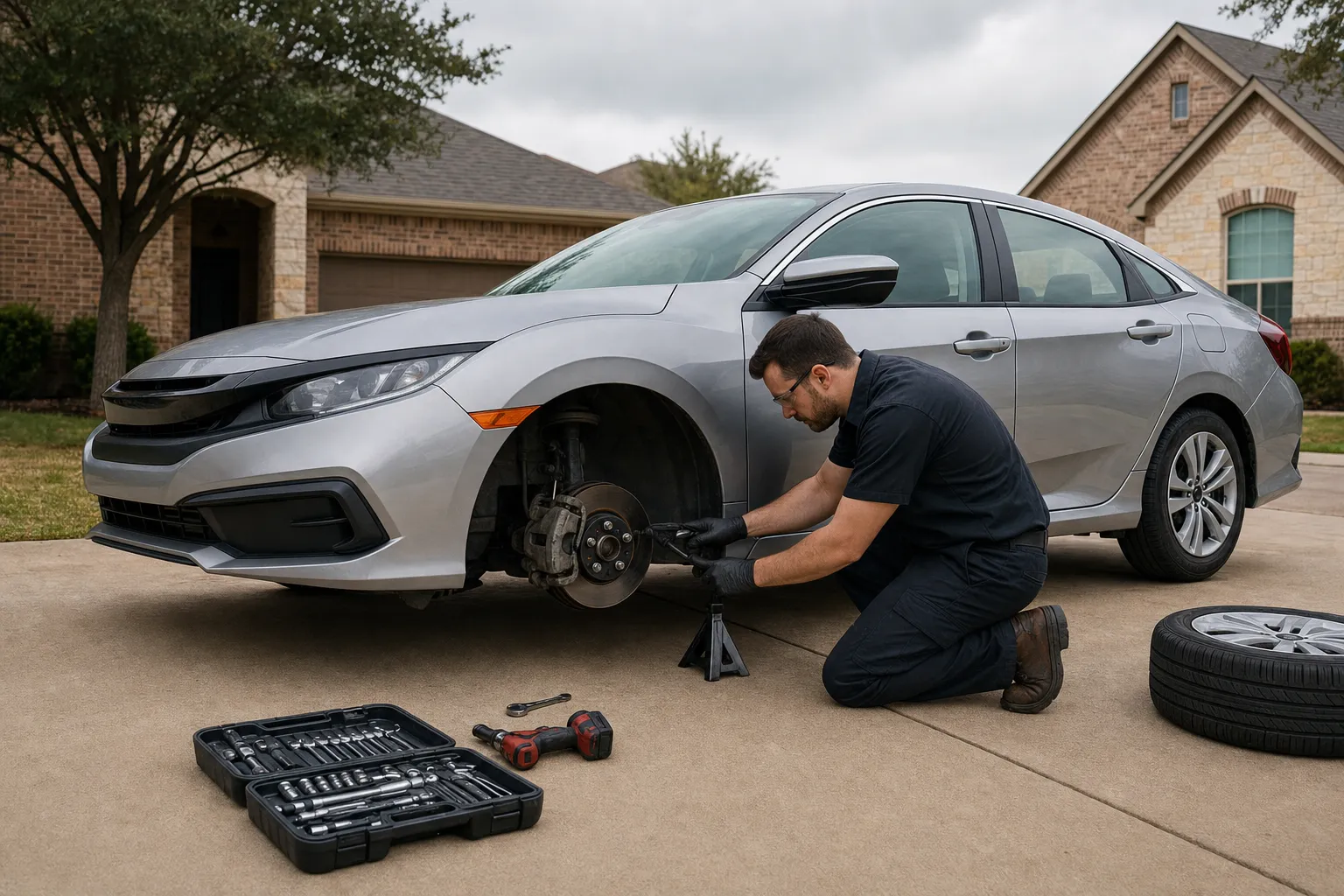
A sound repair begins with a safe support setup, wheel removal, and a comparison of the affected corner with the opposite side. The technician checks pad thickness, rotor condition, clip contact areas, guide-pin travel, piston boot condition, fluid leaks, hose condition, and whether the wheel turns freely. The vehicle's service information then determines the correct component procedure and torque specifications.
When the cause is confirmed, the repair can be specific. A pin or clip issue calls for the correct hardware work. A piston or caliper-body problem calls for the appropriate caliper repair or replacement. A restricted hose needs hydraulic repair and correct bleeding. Overheated pads or a damaged rotor may need to be included when drag has already affected the friction surfaces.
After repair, the brake needs more than a new part. The technician verifies that the hardware moves as intended, fluid is sealed where the hydraulic system was opened, the pedal behaves normally, and the affected wheel no longer drags. That final check is what separates a temporary release from a brake repair that actually addresses why the caliper stuck.
Front and rear calipers can need different procedures
Front brakes commonly do more of the vehicle's stopping work, but a sticking rear caliper can still create a hot wheel, uneven wear, and a pull. The rear corner may include a parking-brake mechanism, an electronic parking-brake motor, or a piston that turns as it retracts. Those designs change the service procedure and the tool required to move the piston without damaging the caliper or parking-brake components.
That is why the vehicle year, make, model, axle, and brake configuration matter before parts are approved. A caliper that looks similar across two vehicles can have a different hose connection, bracket, piston design, pad shape, parking-brake arrangement, or electronic service mode. The correct repair uses the information for that vehicle, then confirms the brake releases normally before the vehicle returns to service.
When mobile brake service may fit the job
Rise High can handle many confirmed pad, rotor, caliper, and brake-hardware repairs on gasoline and hybrid passenger vehicles when the vehicle is safely parked and the work fits a mobile setting. Rise High provides labor only, so the correct approved parts and an accessible work area are part of confirming the repair visit.
A level driveway, open parking area, or other safe worksite gives a mobile brake repair a better chance of being the right fit. A busy roadside, steep surface, major corrosion, extensive brake-line repair, significant hydraulic troubleshooting, or a vehicle that needs a lift can make a repair shop the better answer. The point is to match the work to the conditions, not force every brake issue into the same appointment.
For an unknown brake symptom, start with on-site diagnostics. For a repair already confirmed by an inspection, the mobile brake repair service page explains the vehicle, parts, and worksite details that help determine whether a repair visit makes sense.
- Park the vehicle and record which wheel smells hot, makes noise, or seems to drag.
- Do not touch the rotor or caliper after driving, as brake parts can be hot enough to burn skin.
- Include any pull, vibration, fluid leak, warning light, soft pedal, or recent brake work in the service request.
- Treat a smoking wheel, fluid leak, major pull, soft pedal, or changed stopping behavior as a reason not to keep driving.
- Choose a confirmed repair visit only when the actual binding part and safe worksite are known.
Get The Right Brake Repair Path
Share the vehicle details, the brake symptom, and where it is parked. Rise High can help you choose diagnostics, a confirmed mobile-friendly repair visit, or a shop appointment.
Frequently asked questions
Can a sticking caliper damage a wheel bearing?
A dragging brake creates heat at one corner of the vehicle. That heat can damage the rotor, pads, seals, and nearby components when the vehicle continues to be driven. A bearing is not the first diagnosis for every hot wheel, but it is one reason not to keep driving until a brake-drag concern is identified.
Why does a caliper stick after brake pads are replaced?
New pads can reveal a slide-pin, hardware, piston-boot, or pad-fitment issue that was already developing. Rust under pad clips, a pin that no longer moves freely, a damaged boot, or a caliper piston that will not retract can keep the new pads from releasing as designed. The repair needs to identify the binding part instead of assuming the new pads caused it.
Can a brake hose make one caliper stay applied?
Yes. A flexible hose can have an internal restriction that allows pressure to apply the brake but does not release normally. That can look much like a caliper problem, so a technician checks the hydraulic side as well as the caliper, pins, pads, and hardware before approving a repair.
Related posts

Cost of Brake Line Repair: What Can Change the Quote
Brake line repair can cost far more when corrosion, access, or multiple lines change the scope. See what to ask before approving work.
Brake Master Cylinder Repair: When to Book Diagnostics
A soft pedal, brake warning light, or fluid concern needs a clear diagnosis before any brake master cylinder repair is approved.
Mobile Brake Repair: What Can Be Done at Home?
What mobile brake repair can cover, when diagnosis comes first, and when Dallas-Fort Worth drivers should choose a repair shop.