Car Won't Start but Lights Work? What to Do First
If your car will not start but the lights work, do not assume the battery is fine. Learn what the symptom means, what to note, and when to book diagnostics.
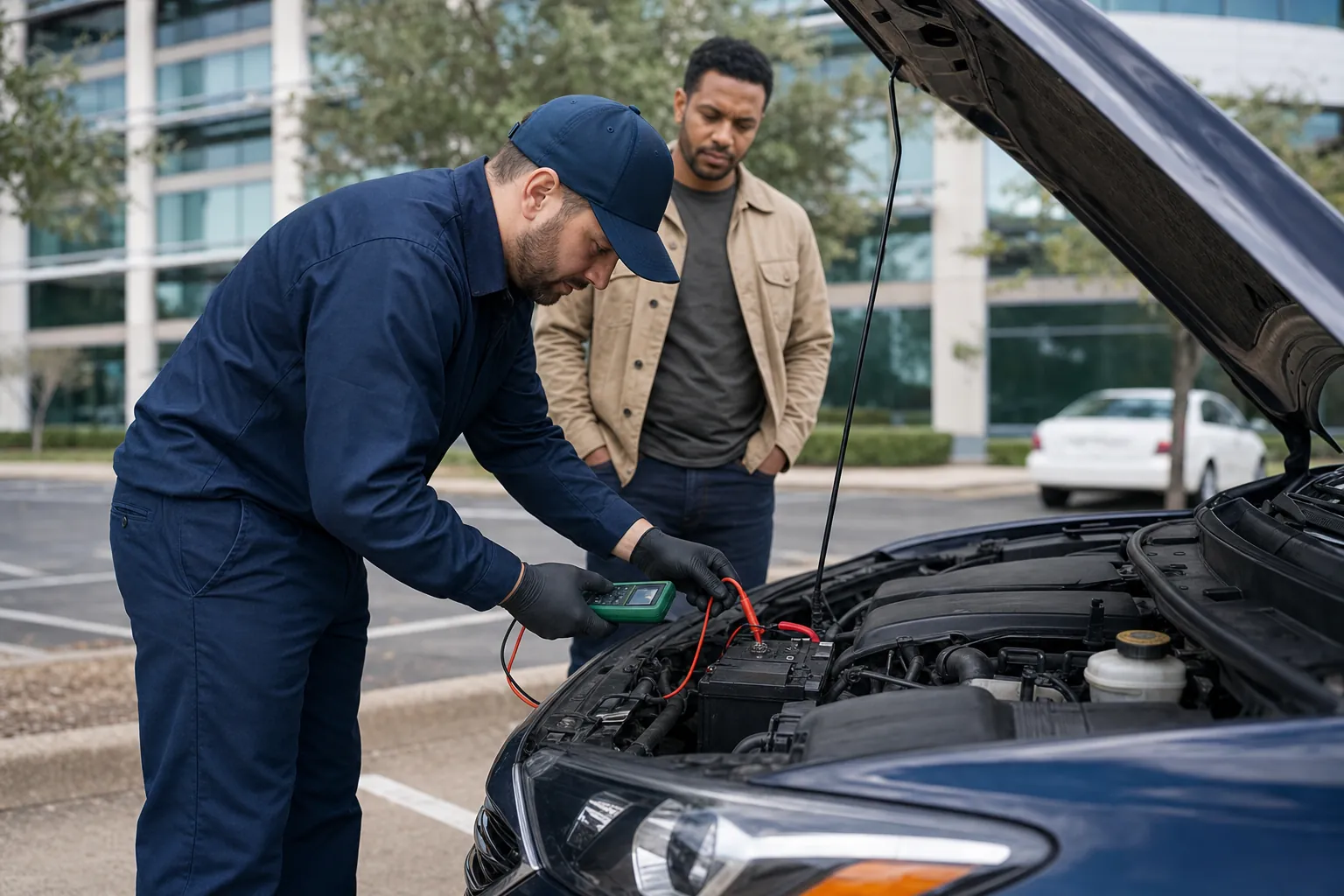
A car can have working headlights, dash lights, and a radio yet still refuse to start. That is frustrating, but it is also an important clue: the vehicle has some electrical power, not necessarily enough power or the right signal to start the engine.
For a Dallas-Fort Worth driver, the useful next step is to notice exactly what happens when you turn the key or press the start button. Does the engine stay completely quiet? Do you hear one click or several fast clicks? Does it crank slowly, or does it crank at normal speed but never start? Those differences help separate a starting-system problem from a problem that happens after the engine is already turning.
Do not let working lights turn into a parts decision. A battery, terminal, cable, starter, relay, fuse, sensor, fuel system, security system, or another control can create a no-start complaint. The symptom needs testing before anyone can responsibly say which repair fits.
Quick Answer
Working lights do not prove the battery or starter system is healthy. Note whether the engine clicks, stays silent, or cranks, then book diagnostics when the cause is not confirmed.
Why lights can work when the car will not start
Interior lights, headlights, the radio, and the dashboard use a much smaller amount of electrical current than the starter motor. Starting an engine asks the battery and cable connections to deliver a brief, heavy load. That means a battery can still light accessories while losing too much voltage under starting load, especially if it is weak, undercharged, cold, or connected through a poor terminal or ground path.
The lights also cannot test every part of the starting process. They do not prove that the starter is receiving the command to engage, that the car recognizes Park or Neutral, that the key or push-button system is authorized, or that the engine has the fuel, spark, air, and control information it needs to run after it cranks. Bright lights are one observation, not a full pass on the vehicle's electrical or starting system.
If the battery is visibly loose, heavily corroded, damaged, or leaking, do not keep attempting to start the vehicle. Avoid touching damaged battery components or bypassing cables. A safe diagnosis can check the battery condition, terminal fit, cable path, and ground connections instead of guessing from the way the lights look.

First, identify the sound and motion
The most useful question is whether the engine turns over. Listen once, then stop repeated attempts. The sound and motion give a technician a better starting point than a theory about the battery.
No sound or a single solid click: The engine is not turning. The battery path, battery terminals, ground connection, starter circuit, starter command, relay, fuse, Park or Neutral recognition, brake-pedal switch, ignition switch, or security system may need attention. This pattern is different from a car that cranks normally.
Rapid clicking or slow cranking: The vehicle may not have enough available power at the starter under load, or it may have resistance in a cable or connection. The lights can still appear normal in this situation. Note whether the lights dim sharply when you try to start it and whether the behavior changes after a properly performed jump-start.
Normal cranking but no start: The starter may already be doing its job. The investigation can shift toward fuel delivery, ignition, airflow, sensor information, engine timing, security authorization, or other controls. Replacing a starter would not solve a vehicle whose engine is already rotating normally.
It starts briefly, then stalls: That is another pattern again. Record how long it runs, warning lights or messages, and whether it only stays running with the accelerator pressed. The guide to a car that starts and then dies explains why that symptom needs a different diagnostic path.
Accessory power is not starting power
Headlights and a radio can operate while the battery path or starter circuit cannot deliver what the engine needs. The correct test happens while the vehicle is asked to start.
Safe checks before you call for help
Start with the simple conditions that are safe to verify. Make sure the vehicle is in Park. If it has a conventional automatic transmission and the area is safe, you can try Neutral once with the parking brake set. On a manual transmission, make sure the clutch is fully depressed. Confirm that the key fob is in the vehicle and that the brake pedal is being pressed if the vehicle requires it to start.
Look for a warning message, key symbol, security light, battery light, or message that appeared before the no-start. Take a photo instead of clearing it by disconnecting the battery. The exact message can be more useful than a guess about what it means. Also note whether the issue began after a jump-start, a recent battery or starter replacement, a long period parked, heavy rain, a refueling stop, or an earlier warning light.
A jump-start may be appropriate when it is performed safely and according to the vehicle's instructions, but treat the result as information, not proof. If the vehicle starts after a jump, tell the technician whether it stayed running, whether the lights dimmed, and whether the same symptom returned. Do not keep jump-starting and driving a car that may stall or lose electrical function.
Do not bridge starter terminals, bypass fuses, use starting fluid, or keep cranking for long stretches. Those actions can create a safety risk, drain the battery, hide the original symptom, or damage components. In a busy roadway, unsafe parking area, or place without room to work, roadside assistance or a tow comes before an on-site diagnostic visit.
What a proper no-start diagnosis looks for
A proper diagnosis starts with the exact sequence of events, then checks the system that matches the symptom. A technician may test battery condition under load, terminal and cable connections, voltage drop, grounds, fuses, relays, starter command, charging-system output, and relevant vehicle data. When the engine cranks normally without starting, the test plan moves in another direction because the starter motor has already turned the engine.
This distinction protects you from replacing parts based on a partial clue. A new battery does not rule out a loose connection, a bad ground, an undercharging condition, starter-circuit trouble, or a completely different no-start cause. Likewise, a click does not automatically identify the starter, and a dashboard light does not identify a failed component by itself.
Rise High charges $150 total for an on-site diagnostic visit when the cause is unknown, with a $50 non-refundable deposit to book. That visit is for confirming the fault. A repair visit makes sense only after the repair direction is known and the job is safe to complete at the vehicle's location.

Details that make the visit more useful
You do not need to diagnose the car yourself. A short, accurate description gives the technician more value than a list of suspected parts. Have the vehicle year, make, model, engine if known, current location, and vehicle identification ready. Rise High uses a VIN or license plate with U.S. state to identify the vehicle correctly before moving forward.
- Say whether the engine stays silent, clicks, cranks slowly, or cranks normally without starting.
- Share photos of warning, key, or security messages after the vehicle is safely parked.
- Explain what changed after a jump-start, if one was attempted safely.
- Mention recent battery, starter, alternator, fuel, or electrical work.
- Give the parking location and any gate, garage, apartment, or access limits.
If the vehicle is at home, work, an apartment, or an accessible parking area, let the team know whether there is level ground and enough room around the car. The appointment process explains how those details help match the visit to the real situation before anyone arrives.
When mobile help fits, and when a shop is safer
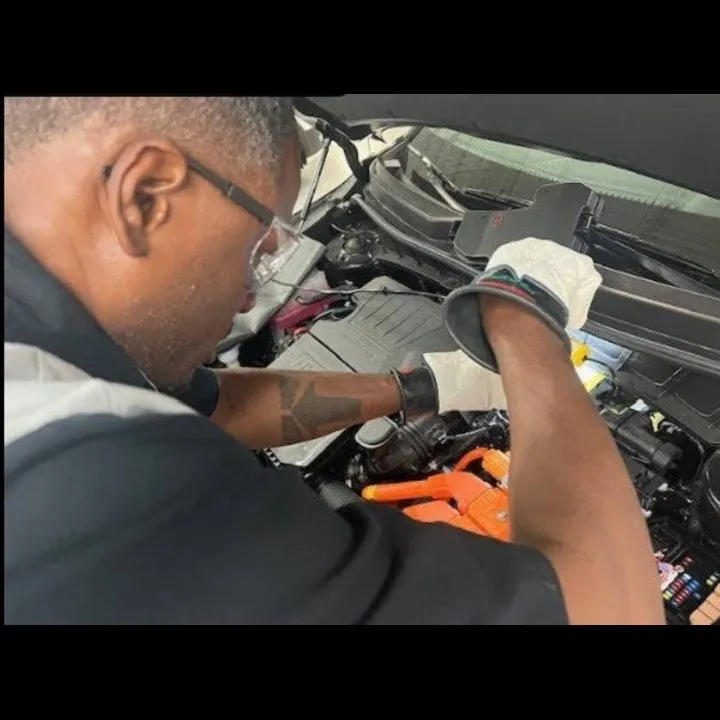
Mobile diagnostics can be a strong fit when the car is safely parked and accessible. Battery and terminal service, some starter work, charging-system checks, and selected electrical repairs may be practical at the vehicle once testing confirms the fault. That can save the delay and cost of towing a vehicle for a repair that can be handled where it sits.
A repair shop may be the better choice for extensive wiring damage, internal engine trouble, major timing work, security or module programming that needs deeper equipment, major disassembly, lift-only access, or a location that is not safe for service. A direct answer that the vehicle needs a shop is useful, because it helps you avoid approving a mobile repair visit that cannot solve the actual problem.
If a safety recall could relate to the concern, check the NHTSA VIN recall lookup before approving repair work. For any diagnosis or repair, make sure the work and charges are clear before authorizing them. The Texas Attorney General's car repair guidance recommends written authorization before inspection, testing, diagnosis, disassembly, or repair.
How Rise High helps when the lights work but the car will not start
Rise High Mobile Mechanics helps Dallas-Fort Worth drivers with diagnostic-first service for no-starts, battery and charging concerns, starter issues, warning lights, and mobile-friendly electrical repairs on gasoline and hybrid passenger vehicles. The goal is to identify why the car will not start before anyone tells you to buy a particular part.
Choose diagnostics when the cause is unknown. If testing confirms a repair that fits the vehicle and a safe worksite, Rise High can explain the next step. If you hear clicking, the guide to a car that clicks but will not start can help you describe the symptom. If the battery has already tested well, read the deeper guide for a car that will not start even though the battery seems good.
Get the No-Start Checked Where It Sits
Call or text with the vehicle details, location, and what happens when you try to start it. Rise High can help you choose diagnostics or a confirmed repair visit.
Frequently asked questions
Can a car battery be bad if the lights still work?
Yes. Lights and accessories need far less current than the starter. A weak battery, poor terminal connection, damaged cable, or ground problem can still keep the engine from cranking even when the dashboard and headlights appear normal.
Why does my car have power but will not start?
The starting system, battery path, starter command, fuel, ignition, sensor information, security system, or another control can be involved. The key detail is whether the engine clicks, stays quiet, cranks slowly, or cranks normally without starting.
Should I try a jump-start if the lights work?
A jump-start can be a useful observation when it is done safely, but it is not a complete diagnosis. If it changes the symptom, tell the technician exactly what happened instead of assuming the battery is the only problem.
Do I need diagnostics or a repair visit?
Choose diagnostics when the cause is not confirmed. A repair visit is the better fit only after testing identifies the failed part and confirms that the repair can be completed safely where the vehicle is parked.
Related posts
Can a Mobile Mechanic Replace a Starter?
When a mobile starter replacement makes sense, why testing comes first, and when a Dallas-Fort Worth repair shop is the better call.
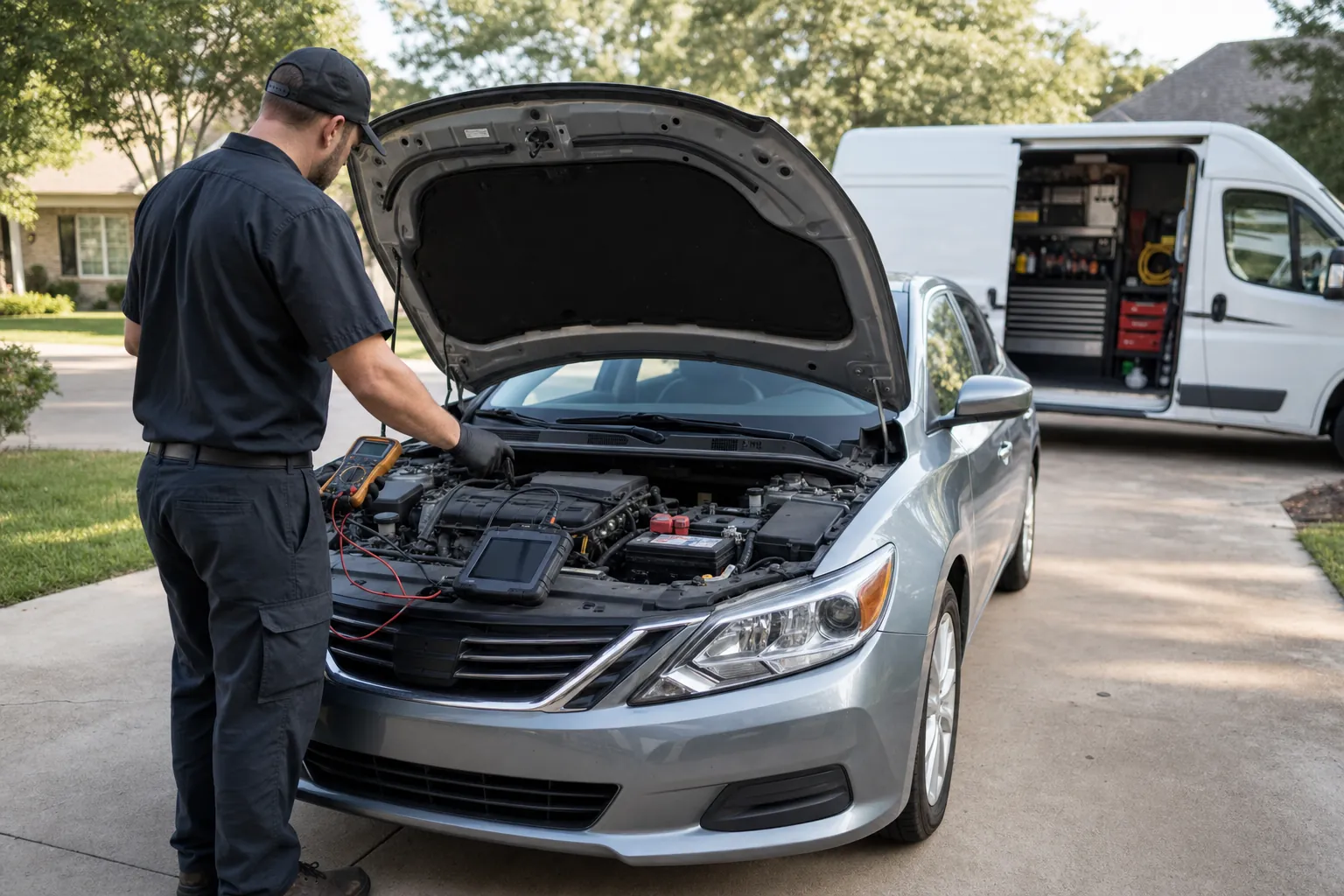
Car Won't Start but Battery Is Good? Next Steps
What to check when your car will not start but the battery seems good, plus when Dallas-Fort Worth drivers should book mobile diagnostics.
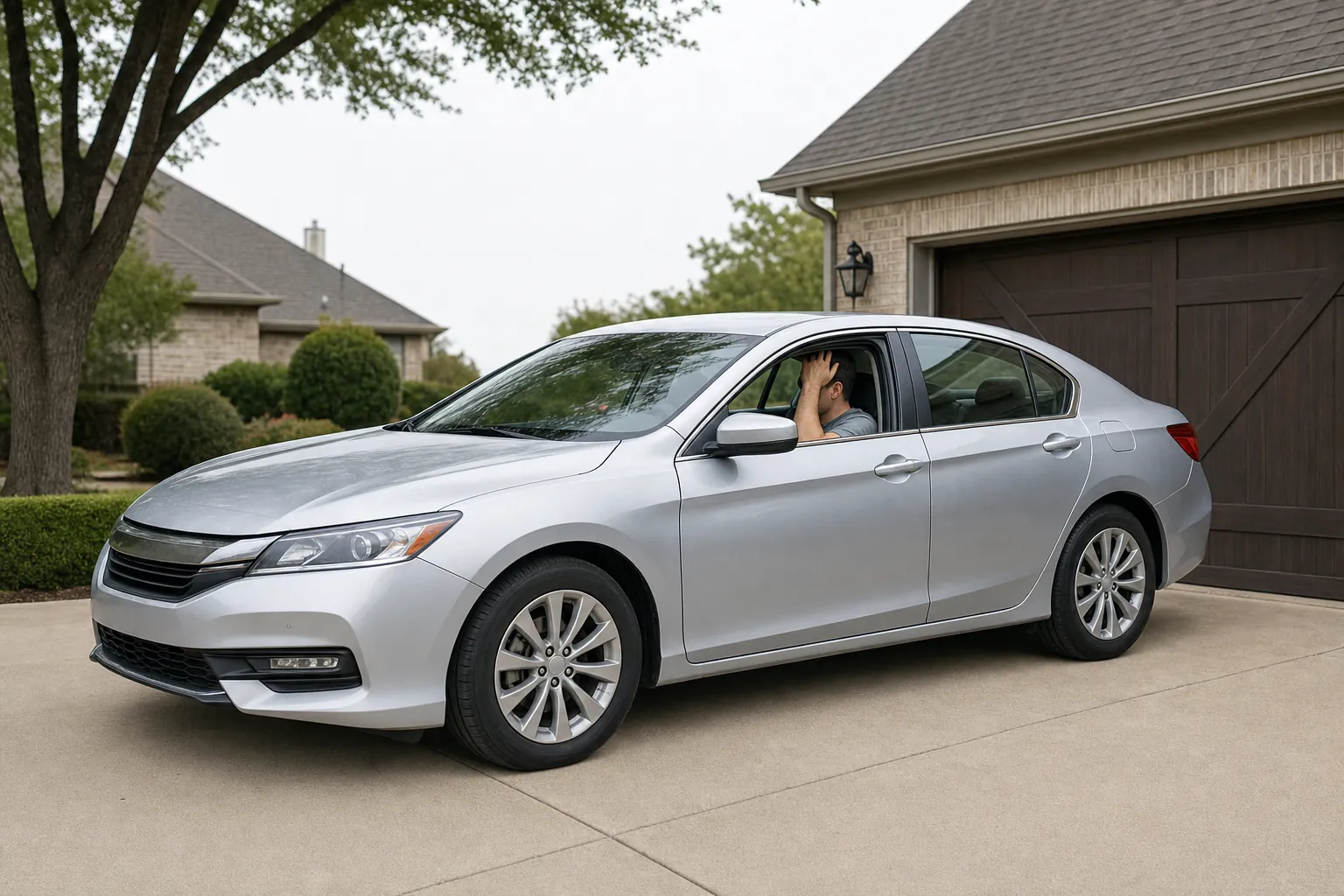
Car Clicks but Won't Start? What to Check First
A car that clicks but will not start may have a battery, cable, starter, relay, or safety-switch problem. Learn what the sound can tell you before booking service.
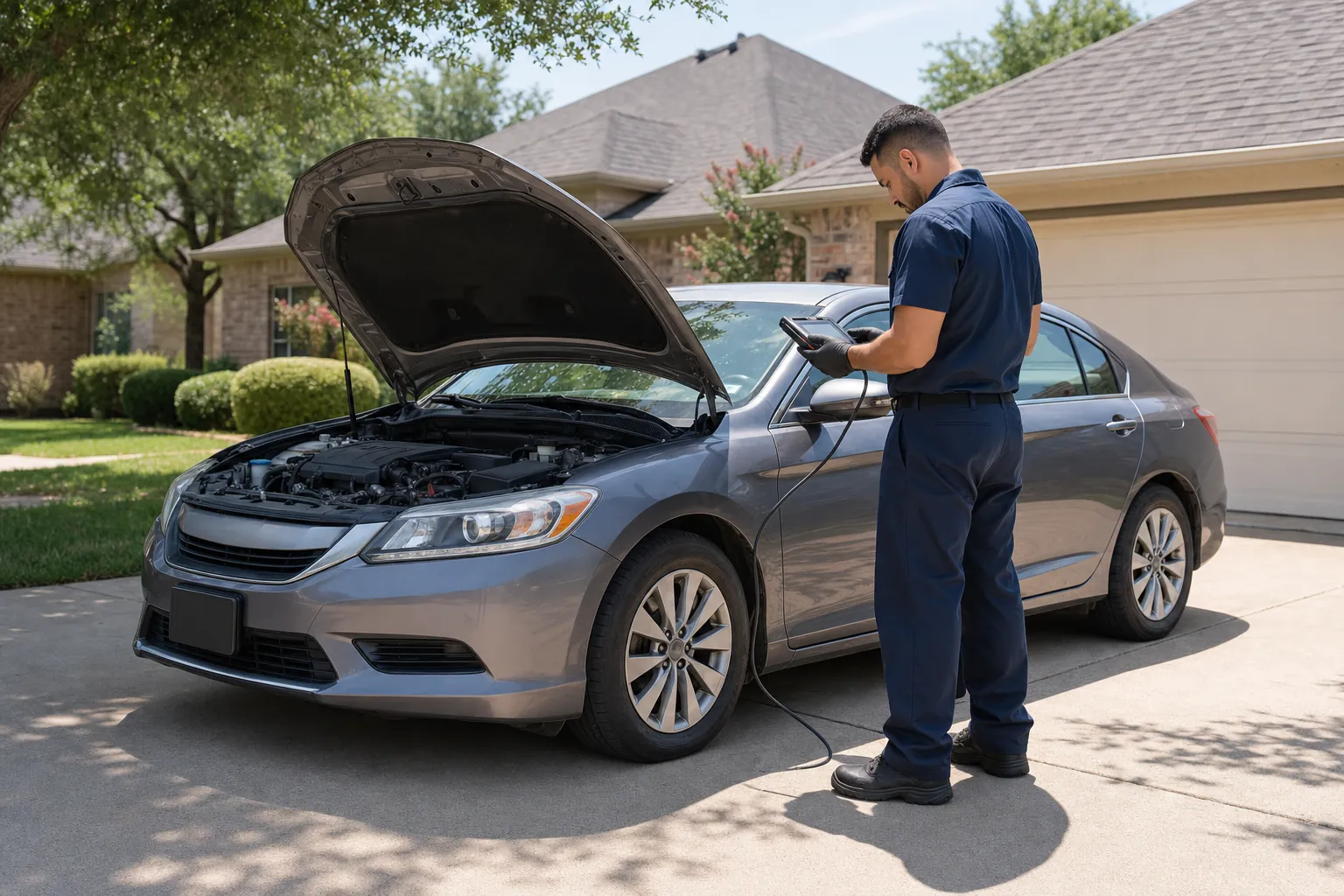
Car Cranks but Won't Start? What to Check First
A car that cranks but will not start needs a different diagnosis than a no-crank problem. Learn what to note, what to avoid, and when to book mobile diagnostics.