Car Starts Then Dies? What to Do Next
If your car starts and then dies, note how long it runs, avoid repeated starts, and learn when Dallas-Fort Worth mobile diagnostics are the right next step.
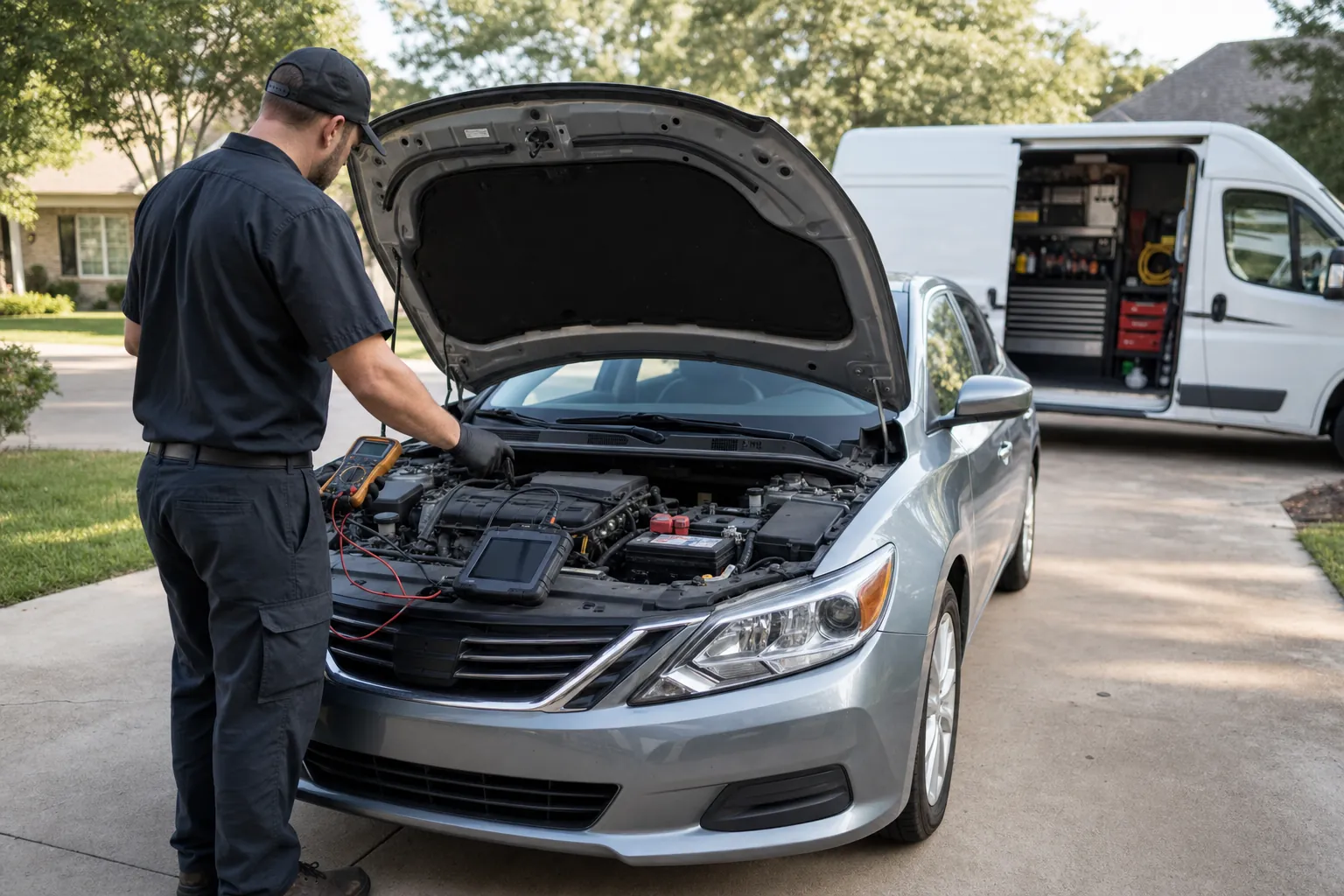
When a car starts and then dies, it has given you a useful clue: the engine can fire, but something is preventing it from continuing to run. That is different from an engine that never turns over or one that cranks without catching at all. It does not, however, point to one automatic repair.
For a Dallas-Fort Worth driver, the practical next step is to keep the situation safe, notice the pattern, and avoid turning a symptom into a parts guess. An engine that runs for two seconds, dies at idle, stalls after a jump, or quits after warming up can have different causes. The vehicle, timing, dashboard messages, and recent history give a technician a much better starting point than an online list of parts.
Quick Answer
If your car starts and then dies, do not keep restarting it or assume it needs a battery, fuel pump, or sensor. Note how long it runs, watch for warning messages, and book diagnostics when the cause is unknown.
Get safe before trying to troubleshoot
If the vehicle starts in a garage, driveway, apartment lot, or workplace space, keep the area ventilated and make sure the car is fully in Park or Neutral with the parking brake set. If it stalls in traffic, use the hazard lights, steer to a safe location if you can do so safely, and do not treat a brief restart as proof that it is ready to drive again.
Stop attempting to start the vehicle if you smell raw fuel or something burning, see smoke, notice an overheating warning, hear loud mechanical noise, or lose normal braking, steering, or electrical behavior. In an active roadway or other unsafe location, roadside assistance or towing comes first. A mobile diagnostic visit only makes sense once the vehicle is parked where it can be approached and tested safely.
One or two brief starts are enough to observe the pattern. Repeated starts can run down the battery, flood the situation with new symptoms, and make a simple explanation harder to separate from the effects of many failed attempts.

What the timing can tell you
“Starts then dies” covers several different experiences. The timing does not diagnose the vehicle by itself, but it changes which questions matter.
It starts and dies within a second or two every time: Record whether a key, padlock, or security light appears and whether the same thing happens with a spare key. A security or immobilizer concern is one possibility, alongside fuel, air, sensor, and control issues. The exact dashboard message is more useful than a guess about what it means.
It stays running only while you hold the accelerator: That can suggest the engine is not holding a stable idle. Airflow, throttle, vacuum, sensor, or idle-control issues may be involved, but forcing it to stay alive with the accelerator is not a repair. Do not rev a vehicle that is running rough, smoking, overheating, or showing a major warning light.
It runs for several minutes, then dies: Note whether the engine is cold or warm, whether warning lights appeared, and whether the vehicle will restart after a short wait. A fault that develops with heat, electrical load, fuel delivery, or changing sensor information needs a different inspection from a vehicle that fails immediately.
It starts after a jump and then dies again: That does not automatically prove the alternator is bad. Battery condition, cable connections, charging voltage, belt drive, wiring, and other electrical issues can all affect the outcome. The useful detail is how long it ran and what the lights or gauges did before it stopped.
The pattern matters more than the guess
How long the engine runs, whether it dies at idle, and what the dash shows are valuable clues. They help narrow the test plan without turning a dashboard light or an internet search into a parts order.
Common systems that can cause the symptom
Fuel delivery: An engine needs steady fuel pressure and correct fuel control to keep running. A pump, relay, wiring concern, pressure problem, restricted supply, or related control issue can create a start-and-stall complaint. The symptom does not prove a fuel pump failed. A technician needs to test the fuel system in the context of your specific vehicle.
Airflow and idle control: Engines need the correct amount of air, especially when settling into idle. An intake leak, throttle-related issue, airflow reading, or idle-control concern can make a vehicle start but struggle to stay running. The way it responds to the accelerator is a clue, not permission to keep driving it.
Ignition and engine-speed information: Spark, engine-position sensors, wiring, and control modules all have a job after the engine first catches. A fault can allow an engine to start briefly, run rough, or stall as conditions change. A stored code may help guide the test, but it is not a stand-alone verdict that a named component is bad.
Electrical power and connections: Battery terminals, grounds, charging-system output, and wiring connections can affect the supply that modern engines and controls need. A recently replaced battery does not clear the charging system or the cables. A healthy-looking terminal can still need a proper connection and voltage-drop check.
Security and vehicle controls: Some vehicles can start momentarily and stop when the key, immobilizer, or security system does not complete its authorization. If a security light or message appears, photograph it and mention whether a spare key changes anything. Avoid disconnecting the battery just to clear a message, because that can remove useful evidence without fixing the cause.

What not to do
Do not replace a battery, fuel pump, throttle body, ignition coil, or sensor because the symptom seems to match a video or forum post. These parts can be involved, but an engine that starts then dies has enough overlap between systems that guessing often costs more than testing.
Do not disconnect the battery to erase a warning light before the vehicle is inspected. Do not use starting fluid, pour in additives, or keep pumping the accelerator to force a rough-running engine to stay alive. Those actions can create safety risks, change the symptom, or leave the next inspection with less useful information.
Do not keep driving just because the car restarted once. A stall that repeats on a road, at an intersection, or in highway traffic is a different risk from a car that is safely parked. If the issue has happened while moving, see what to do when a car loses power while driving before you try to use the vehicle again.
What a diagnostic visit can check
A diagnostic visit begins with the exact sequence: when the symptom started, how long the engine runs, whether it stalls only at idle, what changed after a jump, and which messages or warning lights appeared. Depending on the vehicle, a technician may check battery and charging condition, terminal and ground quality, relevant fault information, engine data, intake concerns, fuel-system behavior, ignition signals, and security or control clues.
The goal is to identify the path that actually failed before choosing a repair. That is particularly important for a start-and-stall complaint because a bad guess can leave a driver with a replaced part and the same unreliable car. Diagnostics create a confirmed direction, then the repair choice can be compared honestly against the vehicle, access, and worksite.
Rise High charges $150 total for an on-site diagnostic visit when the cause is unclear, with a $50 non-refundable deposit to book. For a confirmed repair, the parts and labor are reviewed before approval. That keeps an unknown symptom from becoming an expensive repair request for the wrong part.
Details to have ready before you call
You do not need to diagnose the vehicle yourself. A short, accurate timeline is more useful than a parts theory. Have the year, make, model, engine if known, current location, and the event that happened before the issue started. Mention recent battery, alternator, starter, fuel, electrical, or security-key work.
- Say whether the engine dies immediately, at idle, after a few minutes, or after a jump.
- Photograph warning, key, or security messages once the vehicle is parked safely.
- Note whether pressing the accelerator changes the symptom, without repeatedly revving the engine.
- Share the parking location, access details, and whether the work area is level and safe.
- Tell the technician about recent repairs, heavy rain, a refueling stop, or a jump-start.
When a shop or tow is the safer choice
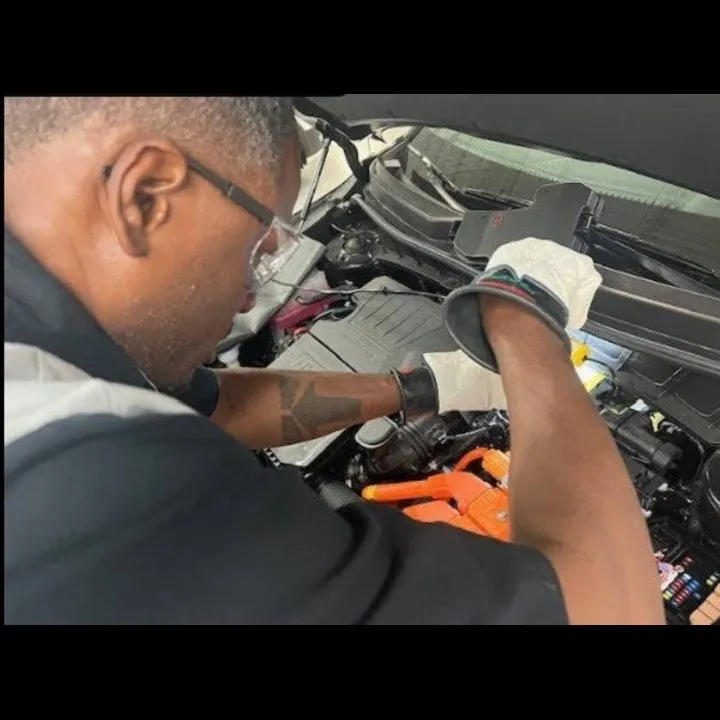
Mobile diagnostics can be a strong fit when the vehicle is safely parked at a home, apartment, workplace, or accessible parking area. Some confirmed battery, connection, charging, ignition, sensor, and mobile-friendly repairs can also be completed on site. The answer depends on the vehicle, the confirmed fault, available part access, and a safe work area.
A repair shop is a better fit for extensive wiring damage, internal engine trouble, major timing or cooling work, advanced module or security programming, major disassembly, lift-only access, or an unsafe parking location. If an open safety recall could relate to the problem, check NHTSA's VIN recall lookup before approving work that might be covered by a manufacturer campaign.
Before approving diagnosis or repair, get a clear scope of the work and the expected cost. The Texas Attorney General's car repair guidance recommends written authorization before a vehicle is inspected, tested, or repaired.
How Rise High helps when a car starts then dies
Rise High Mobile Mechanics helps Dallas-Fort Worth drivers with diagnostic-first service for no-starts, battery and charging concerns, electrical faults, warning lights, and mobile-friendly repairs on gasoline and hybrid passenger vehicles. When the engine starts and dies, the right first move is to understand why it will not keep running, not to start ordering likely parts.
Begin with diagnostics when the cause is unknown. If testing confirms a repair that fits the vehicle and a safe worksite, Rise High can explain the next step. If the vehicle needs a repair shop, you get a direct answer before spending money on a visit that cannot solve the actual problem. If the engine cranks but never starts, the crank-no-start guide explains the difference.
Get the Start-And-Stall Checked
Call or text with the vehicle details, location, and what happens after the engine starts. Rise High can help you choose diagnostics or a confirmed repair visit.
Frequently asked questions
Why does my car start and then die right away?
A car that starts and then dies may be losing the fuel, air, ignition, sensor information, electrical power, or security authorization it needs to keep running. The timing matters, but the symptom alone cannot confirm which part failed.
Can I drive a car that starts and then dies?
Do not rely on the vehicle for normal driving until it can idle and run reliably. A stall in traffic can be dangerous. Stop immediately if there is smoke, a fuel smell, overheating, a major warning light, or a change in braking, steering, or vehicle control.
Does a car that starts then dies need a fuel pump?
Not necessarily. Fuel delivery is one possibility, but airflow, idle control, ignition, sensor information, wiring, battery connections, and anti-theft controls can create a similar symptom. Testing should come before a fuel-pump or other parts decision.
Should I book diagnostics or a repair visit?
Book diagnostics when the cause is not confirmed. A repair visit fits after testing identifies the failed part and the work can be completed safely where the vehicle is parked.
Related posts
Car Won't Start but Battery Is Good? Next Steps
What to check when your car will not start but the battery seems good, plus when Dallas-Fort Worth drivers should book mobile diagnostics.

Car Clicks but Won't Start? What to Check First
A car that clicks but will not start may have a battery, cable, starter, relay, or safety-switch problem. Learn what the sound can tell you before booking service.
Car Cranks but Won't Start? What to Check First
A car that cranks but will not start needs a different diagnosis than a no-crank problem. Learn what to note, what to avoid, and when to book mobile diagnostics.
Car Loses Power While Driving? What to Do Next
If your car loses power while driving, get somewhere safe, note the warning signs, and find out whether the issue is engine, charging, fuel, or electrical related.